What Happens When You Stop Talking and Start Listening to Your Food
Walk into most American kitchens during dinner prep and you'll find a familiar scene: a podcast blasting from a Bluetooth speaker, a phone propped against the backsplash playing YouTube, maybe a TV murmuring from the next room. Conversations bouncing around. Someone asking what's for dessert before the main course is even halfway done. It's lively. It's warm. And according to the philosophy behind some of Japan's most respected culinary traditions, it might also be getting in the way.
At KB Kitchen Okubo, we spend a lot of time thinking about what makes Japanese cooking feel different — not just in flavor, but in presence. And one of the most surprising answers we keep coming back to isn't a technique or an ingredient. It's quiet.
The Concept of Ma: Space That Isn't Empty
In Japanese aesthetics, there's a word — ma (間) — that loosely translates to "negative space" or "pause." You've probably encountered it in the context of visual art or architecture: the deliberate emptiness on a plate that makes the food on it feel more intentional, the gap between notes in a piece of music that gives the melody room to breathe. But ma isn't just about what you see or hear. In the kitchen, it's about what you don't do.
Okubo's chefs practice a version of ma that extends into the entire cooking environment. It's not that kitchens here are monasteries — there's movement, there's coordination, there are cues called out when timing matters. But beneath all of that is a baseline of focused quiet that most Western cooks would find almost startling at first. The idea is simple: when you reduce external noise, you make room for the sensory information your food is constantly broadcasting.
The sizzle that tells you the pan is too hot. The shift in smell that signals garlic is about to cross from golden to burnt. The subtle change in texture when you press a piece of fish and it's just done. These are the signals that separate a good cook from a great one — and they're incredibly easy to miss when your attention is split ten different ways.
Why Silence Is a Skill, Not a Mood
Here's the thing about cooking quietly: it doesn't come naturally to most of us, especially in American culture where multitasking is practically a virtue. We're conditioned to fill silence, to layer activity on top of activity, to feel like we're wasting time if we're not consuming content while we cook.
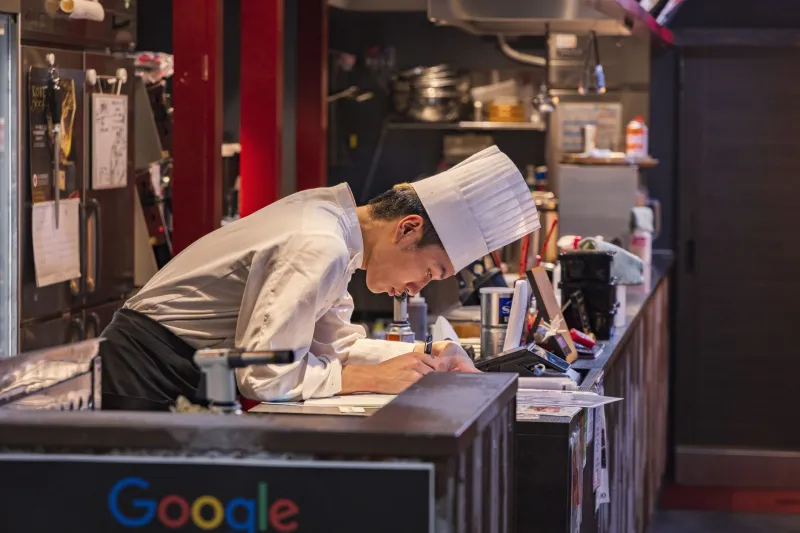
But silence in the kitchen isn't passive. It's an active choice that requires practice, just like knife technique or heat control. Okubo's chefs don't arrive at stillness by accident — they cultivate it deliberately, often from their earliest days of training. Junior cooks aren't just taught what to do; they're taught to observe, to listen, to resist the urge to fill every moment with movement or conversation. Watching a senior chef work in near-silence isn't about reverence — it's about learning to read the kitchen the way you'd read a room.
That same principle translates directly to your home kitchen. When you cook without distraction, you start to notice things you never did before. You realize your burner runs hotter on the left side. You catch the moment miso broth starts to approach a boil before it actually gets there. You feel the resistance in a carrot as your knife moves through it and understand, almost instinctively, whether it's fresh or not. These aren't mystical insights. They're just data — data your senses have always been capable of collecting, but rarely get the chance to process.
What "Minimal Conversation" Actually Looks Like
It's worth being clear: practicing kitchen silence doesn't mean cooking in total isolation or banishing your family from the room. In Okubo's kitchens, communication still happens — it's just purposeful. Questions get asked when the answer matters. Observations get shared when they're useful. The rest of the time, energy goes into the food.
For home cooks, this might look like keeping the podcast off during the first fifteen minutes of prep — the window when you're making the most decisions and setting the tone for everything that follows. It might mean telling whoever else is in the kitchen that you need five focused minutes to get the timing right on something tricky. It might just mean turning down the volume, literally and mentally, when you're doing something you've never cooked before.
The goal isn't silence for its own sake. It's attention. And attention, it turns out, is the ingredient most American home cooks are consistently underusing.
A Practical Reset for Your Kitchen Routine
If you want to experiment with this approach, here are a few low-stakes ways to start:
Cook one dish completely without background noise. Pick something simple — miso soup, a stir-fry, scrambled eggs — and make it with zero audio input. Notice what you hear. Notice what changes when you're actually listening.
Narrate to yourself, silently. As you cook, run a quiet internal commentary: the oil is shimmering now, the onions are softening, that smell is changing. This keeps your attention anchored to the food rather than drifting.
Pause before you plate. Before anything goes on the dish, stop for a moment. Smell it. Look at it. This is your ma — a deliberate beat of space before the meal becomes the meal.
Cook alone occasionally. Even if you love cooking with your partner or kids, give yourself one solo session a week where you move at your own pace and don't need to manage anyone else's experience. It's a different kind of cooking, and it teaches you things about yourself as a cook that collaborative cooking can't.
The Meal That Comes from Attention
There's a reason food cooked with care tastes different — and it's not entirely mystical. When a cook is fully present, they catch problems early, adjust in real time, and bring a kind of consistency to the work that distracted cooking simply can't replicate. The dish that results carries that attention in it somehow. You can taste the difference even if you can't always name it.
At KB Kitchen Okubo, we think about this a lot. Japanese culinary tradition has always understood that the cook is part of the dish — that what you bring to the kitchen, mentally and emotionally, ends up on the plate. Stripping away noise isn't about being austere or precious about cooking. It's about giving yourself the best possible chance to make something genuinely good.
So next time you're cooking dinner, try turning it all the way down. Let the kitchen speak. You might be surprised how much it has to say.