Watch First, Cook Later: The Okubo Way of Learning Without a Recipe in Sight
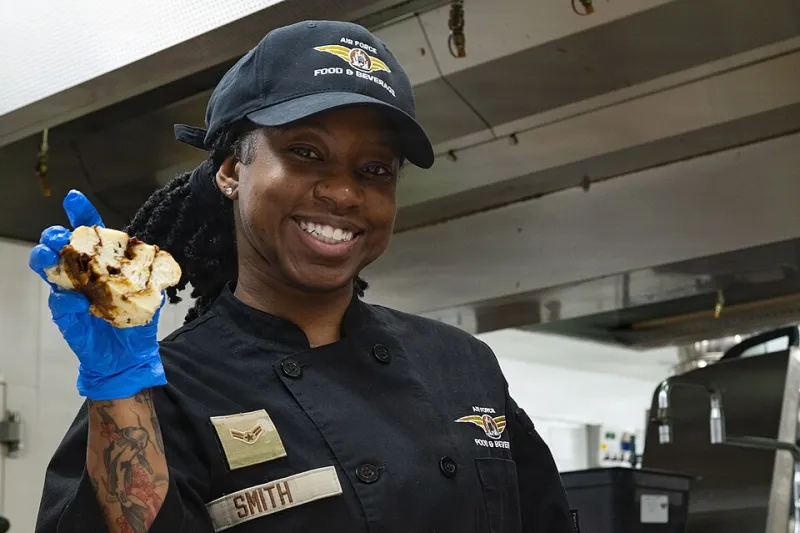
Photo: U.S. Air Force photo by Staff Sgt. Jordan Garner, Public domain, via Wikimedia Commons
Most Americans learn to cook from a recipe. Step one, step two, step three. Two teaspoons of this, a quarter cup of that. Follow the instructions, get the result. It's logical, reproducible, and for a lot of people, it works — until it doesn't. Until you're standing in front of a pan that's behaving differently than the recipe said it would, and you have absolutely no idea what to do next.
At KB Kitchen Okubo, we've always been fascinated by a different model — one that doesn't begin with instructions at all. The traditional Japanese approach to culinary training is built around something more fundamental than recipes: it's built around watching, listening, and developing a physical relationship with ingredients over time. It's slower. It's sometimes frustrating. And it produces cooks who can handle anything the kitchen throws at them.
The Apprentice Who Wasn't Allowed to Cook
There's a well-documented tradition in Japanese professional kitchens — particularly in restaurants following the shokunin (artisan) model — where a new apprentice might spend their first several months doing almost no actual cooking. They wash dishes. They observe. They clean. They watch the senior cook make the same broth every single morning and they say nothing.
This isn't hazing or hierarchy for its own sake. It's a deliberate pedagogical choice rooted in the belief that cooking knowledge, at its deepest level, isn't verbal. It can't be fully captured in a recipe card. The way a skilled cook adjusts the flame without looking at it, the way they press a piece of fish with two fingers to gauge doneness, the way they tilt a pan to hear whether the oil is ready — these are things that have to be absorbed before they can be practiced.
The Japanese term minarai describes this learning-by-watching stage. Mi means to look; narai means to learn. You learn by looking. The assumption is that your body and your unconscious mind are taking in information that your conscious, note-taking mind can't fully process in real time.
At Okubo, our senior cooks talk about this stage with a kind of fondness. It was frustrating, they'll tell you — but it was also the period when they developed the most important skill a cook can have: the ability to pay attention.
What Recipes Can't Teach You
Recipes are extraordinarily useful tools. We're not dismissing them. But they have a built-in limitation: they describe a specific set of conditions that may or may not match the ones in your kitchen on a given day.
Your onions might have more water content than the recipe developer's onions. Your stove runs hotter. Your pan is thicker. The humidity in your kitchen today is different from the humidity in the test kitchen where someone developed that bread recipe. A recipe can't account for all of that. Only a cook who has developed sensory awareness can.
Here's a concrete example. A recipe might say "cook the onions until golden, about 10 minutes." But if you've never watched onions caramelize through their full arc — from raw and sharp to soft and sweet to deeply amber — you won't know whether your onions at the 8-minute mark are ahead of schedule or behind it. You'll just watch the clock. And the clock doesn't know anything about your onions.
A cook trained in the observational tradition doesn't need the time estimate. They know what golden onions smell like at different stages. They know the sound the pan makes when the moisture has cooked off and the sugars are starting to develop. They know how the onions feel when you push them around with a wooden spoon. The recipe becomes a rough sketch; their senses fill in the rest.
How This Training Actually Works at Okubo
Our kitchen doesn't run a formal apprenticeship program in the classical sense, but the philosophy of sensory learning is baked into how we work. New cooks are encouraged to spend time just watching — during prep, during service, during the quiet moments when a senior cook is tasting and adjusting a broth.
We ask a lot of questions that don't have precise answers. What does this smell like to you right now? What do you think it's missing? If you close your eyes and taste this, what's the first thing you notice? These aren't trick questions. They're exercises in developing a vocabulary for sensation.
We also cook the same things repeatedly — not because we lack creativity, but because repetition is how muscle memory forms. A cook who has made dashi fifty times doesn't need to think about the temperature at which kombu starts to release bitterness. Their hands just know. That kind of knowledge is faster and more reliable than any written instruction.
A Roadmap for Developing Intuitive Cooking at Home
You don't need to spend six months washing dishes before you're allowed to make dinner. But there are real ways to start shifting from recipe-dependency toward something more instinctive.
Cook the same dish ten times. Pick something simple — a miso soup, a stir-fry, a simple rice dish — and make it repeatedly without changing the recipe. On the third or fourth attempt, start noticing things you didn't notice the first time. The way the broth smells before it's ready versus after. How the texture changes as it cools. By the eighth or ninth time, you'll start making small adjustments without thinking about it. That's intuition forming.
Turn off the timer. Not permanently, and not for things that genuinely require precision (baking, candy making). But for sautéed vegetables, seared proteins, and simmered sauces, try relying on your senses instead of the clock. Look at the color. Smell the caramelization. Listen for the change in sound as moisture evaporates. You'll be surprised how quickly you calibrate.
Taste constantly and narrate what you taste. This sounds strange, but verbalizing what you're tasting forces you to be specific. Don't just think needs something — say out loud (or in your head) it's flat, there's no brightness, it could use acidity. Building a sensory vocabulary makes you a better problem-solver in the kitchen.
Watch an experienced cook without doing anything. The next time you're at a dinner party where someone else is cooking, or you're at a restaurant with an open kitchen, just watch. Don't check your phone. Notice how they move, when they taste, how they adjust the heat. You're doing minarai without knowing it.
Let go of the recipe at the end. Use your recipe for the first 80% of the cooking process if you need to. But in the final stretch — the seasoning, the finishing, the plating — put the recipe down and trust what your senses are telling you. This is where the real cooking happens anyway.
The Deeper Point
Learning to cook intuitively isn't about rejecting structure or throwing your cookbooks away. It's about building enough of a foundation that the structure becomes optional. When you know what a dish should feel like at each stage, you can improvise, substitute, and adapt without anxiety.
That's what the Okubo kitchen is really trying to cultivate — not cooks who can follow instructions flawlessly, but cooks who can think. Who can walk into a kitchen with whatever's on hand and make something worth eating. Who trust their senses more than they fear their mistakes.
The recipe is a starting point. Your attention is the real ingredient.