Less Is More: The Japanese Secret to Letting Every Ingredient Speak for Itself
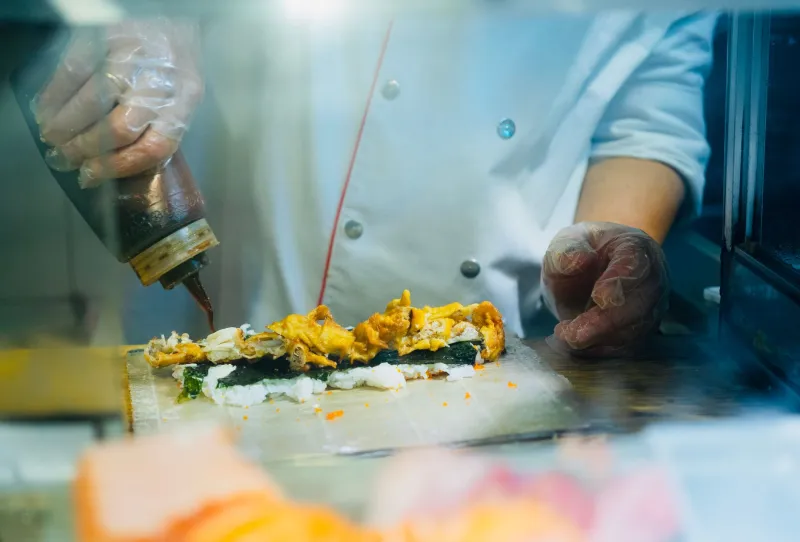
There's a moment in the KB Kitchen Okubo prep kitchen that happens every single day, and most visitors would probably miss it entirely. A chef reaches for a garnish—something small, something green, something that would look perfectly reasonable on the plate—and then stops. Sets it down. Steps back. Looks at what's already there. And decides the dish is done.
That pause? That's not indecision. That's craft.
In Japanese culinary philosophy, knowing when to stop is just as important as knowing what to add. It's a discipline that runs completely counter to the way most American home cooks were taught to think about food—where more toppings mean more generosity, more sauce means more flavor, and a crowded plate means a satisfied guest. But here at Okubo, we've come to believe that the opposite is often true.
What 'Ma' Actually Means (And Why It's Not Just About Plating)
The Japanese word ma (間) doesn't translate cleanly into English, which might be part of why it gets so misunderstood. It's usually rendered as "negative space" or "emptiness," but that makes it sound passive—like the absence of something. In practice, ma is anything but passive. It's the deliberate, intentional creation of space that gives meaning to what surrounds it.
You hear ma discussed most often in the context of Japanese art, architecture, and music. In a traditional garden, the raked gravel around a stone isn't empty—it's what makes the stone matter. In a piece of shakuhachi flute music, the silence between notes is where the emotion lives. The same logic applies directly to food.
When a chef places three slices of sashimi on a wide ceramic plate with nothing else nearby, the empty space around them isn't wasted real estate. It's a frame. It's the visual equivalent of lowering your voice so people lean in to listen. The space tells the diner: look here, taste this, this is what matters.
American plating culture tends to work in the opposite direction. We fill. We stack. We sauce. A lot of that comes from a deep-rooted cultural association between abundance and hospitality—and honestly, there's nothing wrong with that impulse. But when everything on the plate is competing for attention, nothing actually wins.
The Flavor Argument for Doing Less
Minimalism in Japanese cooking isn't only a visual philosophy. It shapes how dishes are seasoned, composed, and built from the ground up.
Take something as simple as grilled fish. At KB Kitchen Okubo, a piece of saikyo-marinated black cod might arrive with nothing more than a small smear of yuzu miso and a single shiso leaf. That's it. No sauce ladled on top, no herb salad piled alongside, no flavored oil drizzled across the plate in artistic swoops.
Why? Because the fish is the story. Every additional element risks muddying that story.
This is a hard pill to swallow if you grew up cooking from recipes that call for seven different spice rubs or sauces built from twelve ingredients. But Japanese cuisine has a different starting point. Rather than asking "what can I add to make this better?" the question becomes "what can I remove without losing anything essential?"
That shift in framing changes everything.
How American Home Cooks Can Start Practicing Restraint
You don't need to completely overhaul your cooking style to start benefiting from this philosophy. A few small habit changes can make a surprisingly big difference.
Plate one less thing than you planned. Seriously, just try it once. If you were going to add a drizzle of balsamic, skip it. If you were going to scatter microgreens across the top, hold off. Taste the dish first and ask yourself honestly: does it need that element, or does it just feel more finished with it there? More often than not, the dish is already complete.
Give your main ingredient room to breathe on the plate. Instead of centering everything in a tight cluster, try placing your protein or main component slightly off-center and leaving a generous portion of the plate open. It feels awkward at first—almost like you didn't finish the job—but it draws the eye in a way that a crowded plate simply cannot.
Season in fewer passes. One of the most common overcooking mistakes isn't adding too much of one ingredient—it's adding too many competing flavors at once. Try building a dish with just two or three flavor elements and really committing to them. Salt, acid, umami. That's a complete flavor profile. Everything else is negotiable.
Let texture do some of the work. Japanese cuisine often uses contrast in texture—something soft against something crisp, something warm against something cool—to create interest without adding more flavors. A bowl of silken tofu with a single spoonful of crunchy sesame topping is a complete dish precisely because the contrast is so deliberate.
The Courage It Takes to Leave Space
Here's the honest truth: restraint is harder than abundance. It requires confidence. When you pile a plate high or layer in a dozen flavors, there's a certain safety in that—if one element doesn't land, another one might. But when you strip a dish down to its essentials, every choice becomes visible. Every decision matters.
That's exactly why the chefs at KB Kitchen Okubo spend so much time working with individual ingredients before they ever think about how to combine them. You can't practice ma without first understanding what you're giving space to. If you don't know what a perfect piece of yuzu-cured salmon tastes like on its own, you won't know when you've added one thing too many.
This is also why the philosophy extends beyond plating into sourcing and shopping. Buying three exceptional ingredients and treating them with care will almost always produce a better meal than buying ten mediocre ones and hoping the combination compensates.
Start Small, Think Big
You don't have to serve a ten-course kaiseki dinner to bring ma into your kitchen. Start with breakfast. Make a bowl of good rice, top it with a carefully chosen pickled vegetable and a sprinkle of toasted sesame, and stop there. Sit with it. Notice how much more you taste when there isn't a crowd of flavors competing for your attention.
That's the promise of restraint: not that your food will taste like less, but that it will finally taste like exactly what it is.
And sometimes, that's the most satisfying thing a meal can offer.